by Jessie Bach
There are approximately 325 public libraries in Alberta and each and every one of them is run by a volunteer library board. Joining a library board can be a great way to give back to your community, meet new people, and gain valuable experience. If you’ve ever thought about joining your local library board or simply been curious about what libraries boards do and what it’s like to serve on one, then this post is for you. Below, I will delve into how library boards are formed, how they operate, and how you can get involved.
In Alberta, public library boards are created and administered under the authority of the Libraries Act. Municipal councils that want to provide library services for their community pass a bylaw establishing a local library board and appoint people to serve on that board. Library boards must have between five and ten members, and members are appointed for three-year terms. When a board member’s term expires, they may be reappointed, or another person will be appointed to take their place. Board members may serve a maximum of three terms.
Library boards in Alberta are governing boards, not advisory boards. This means that the board is legally a corporation and has full management and control over the library. Boards can hire and fire staff, sign contracts and agreements, create bylaws, and sue or be sued.
The Libraries Act lays out the powers and duties of public library boards. There are several things that, by law, a library board must do. These include:
Individual board members have legal responsibilities as well, including:
Understanding the legal structure and responsibilities of library boards is one thing, but what is it really like to serve on one? To find out, I spoke with Lori Bach (yes, my mom!) who spent more than fifteen years on the board of the Standard Municipal Library, serving as chair for several of those years. My mom became involved with her local library board in a way that most volunteers from small, rural communities will be familiar with. Already an active community member and volunteer, as well as an avid reader and library user, she was approached by a current board member and asked to join. “I had the time and interest,” she tells me, “so, I said yes!”
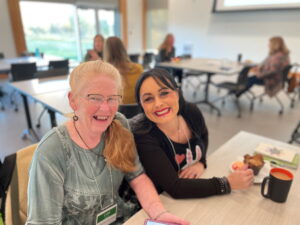
Saying yes was just the beginning. My mom soon learned that serving on a library board involves much more than a love of books and reading. “What I didn’t know before I joined is that library boards live, breathe, eat, and sleep money — applying for it, spending it, raising it, and fighting for it,” she explains. “Many people, when they think about library boards, don’t realize that it’s not all about books, story times, and programs.” Financial oversight of the library makes up a large portion of a library board’s work, and budgeting, fundraising, and financial accountability all require significant planning and regular meetings.
Library boards must meet at least three times per year, but many boards will hold meetings more frequently. Every board will do things a little bit differently; however, the core business year of a library board is fairly predictable, with items like the budget and annual reports prepared at the same time every year. A typical board meeting will include a treasurer’s report, a report from the library manager, review of one or more of the library’s policies, and planning or discussion about fundraising, the library facility, and community partnerships or events.
Beyond the regular meetings, library board members will often participate in fundraising activities like community dinners, raffle ticket sales, or donation drives. They may also advocate on behalf of the library to the municipal council or provincial government, or at community events. They also show support for the library by attending its programs and special events. Serving on a library board, especially in smaller or rural communities, provides ample opportunity to get hands-on experience. According to my mom, “everyone is needed to help decorate the parade float, put up posters around town, and run the fundraisers.”
There is also an educational component to the work library boards do. Libraries are complex institutions — accountable to different levels of government as well as to the people in their communities, and there can be a lot to learn. Mom stresses how important it is for new board members to take the time to learn as much as possible during their first six months on the board. They need to familiarize themselves with regulations and compliance, the ins and outs of library operations, and the needs of the community. This could include attending a Board Basics Workshop or orientation session hosted by the Public Library Services Branch, meeting with the library manager to learn about the day-to-day business of the library, or attending one of the several library conferences held in Alberta each year.
While the final responsibility for appointing library board members lies with the municipal council, the recruitment of new board members typically falls on the library board and administration. Library boards seek out members with a broad range of knowledge and skills, including bookkeeping, building maintenance, project management, and event coordination. They will also look for people across a variety of ages, genders, and backgrounds to ensure diverse perspectives and representation. That said, according to Mom, the most valuable traits a library board member can have are “a willingness to learn, open-mindedness, and the desire to serve their community.”
For Mom, serving on her local library board was an immensely rewarding experience. “If you’ve been thinking about it, just do it!” she says. “I loved my time on the library board. It was one of the most rewarding things I’ve ever done. I learned so much by attending workshops and conferences, making connections with other library supporters, and meeting interesting people.”
Alberta’s library boards play a vital role in ensuring strong, sustainable, and effective library services. If you’re ready to contribute your skills, time, and passion, contact the librarian or library manager at your local library, or connect with a current member of the board, to learn more about board opportunities. Library board service goes beyond meetings and budgets — it’s about getting to know your community and working to deliver the services that they want and need. Libraries depend on volunteers, and your skills and perspectives can make a meaningful contribution.
Beyond the Stacks is a column about libraries in Alberta and the useful and necessary services they provide.
 Jessie Bach grew up on a family farm in Southern Alberta, and is a life-long library user and book lover. She has a degree in history from the University of Saskatchewan, and a Master of Library and Information Studies from Dalhousie University. Jessie has worked in archives, academic libraries, corporate records management, and now public libraries. Her current role is Bibliographic Services Manager at Marigold Library System where she manages the team that does acquisitions, cataloguing and processing of library material for Marigold’s thirty-six member libraries. She currently lives in Calgary with her partner and, in true librarian fashion, four cats. Jessie likes to read (of course), knit, consume way too many true crime podcasts, and lift weights in the gym.